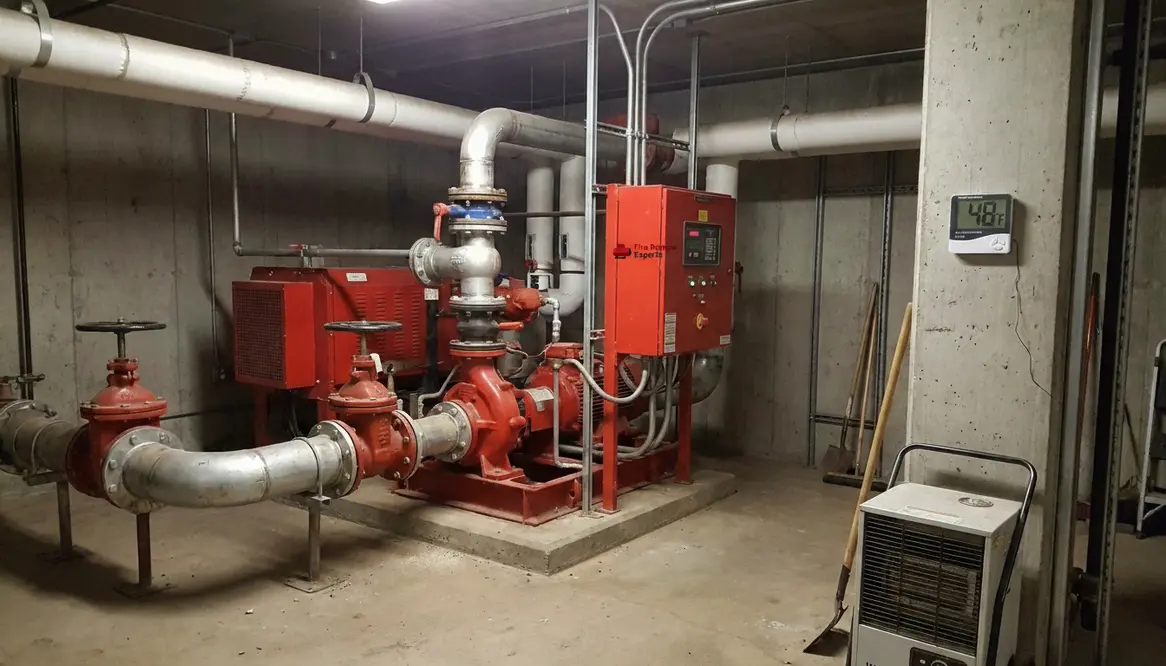
Fire Pump Room Temperature Requirements Guide
When I talk about fire pump room temperature requirements for commercial buildings, I am really talking about one quiet rule that can save a very loud problem. A fire pump room has to stay warm enough to protect the pump, the pipes, and the whole fire protection system when the weather turns rude. In most commercial and industrial facilities, that means keeping the room above freezing, with many systems aiming for a steady minimum around 40°F to 50°F. If that sounds simple, good. It should be. But as with most building systems, the devil shows up wearing a hard hat and carrying a clipboard.
What I Mean by Fire Pump Room Temperature Requirements
I always start with the basic idea: the room must stay warm enough to stop water from freezing and damaging the fire pump system. If the temperature drops too low, pipes can crack, valves can fail, and the pump may not perform when the building needs it most. That is not a small issue. That is the kind of issue that turns an ordinary maintenance day into a very expensive lesson.
In commercial buildings, I look at the room as a controlled space. It should not swing wildly with outdoor weather. Instead, it needs stable heat, proper insulation, and the right ventilation balance. If the space feels like a walk in freezer in January, the system has a problem. If it feels like a sauna from a bad 1980s movie, that is also a problem. The goal is steady, not dramatic.
How I Keep the Room Warm Without Cooking the Equipment
The best approach is simple: maintain heat, manage airflow, and stop outside air from doing whatever it wants. I use dependable heat sources, tight door seals, and proper insulation to keep the room within safe limits. At the same time, I avoid trapping too much heat around the pump motor and controls. The room should protect the equipment, not challenge it to a staring contest.
Here is how I think about it in practice:
- Heating should keep the room above freezing at all times.
- Insulation should reduce heat loss through walls, ceilings, and doors.
- Ventilation should support the equipment without dropping the temperature too far.
- Monitoring should alert staff before a minor drift becomes a major headache.
So, while temperature control matters, it does not work alone. It plays with the rest of the system, and like any good ensemble cast, every part has to do its job. Think less superhero solo, more “The Avengers,” but with pump jackets.
Why Fire Pump Room Temperature Requirements Matter in Commercial Buildings
I treat this topic as a life safety issue first and a building maintenance issue second. A fire pump can only do its job if the conditions around it stay right. In colder climates, a weak room temperature setup can lead to frozen lines. In warmer areas, poor airflow can still cause trouble because heat buildup can shorten equipment life and affect performance.
Commercial and industrial facilities often run long hours, hold valuable assets, and depend on steady fire protection. That means the pump room cannot become an afterthought. I have seen buildings spend serious money on high end systems, then try to protect them with a room that feels like a closet behind a vending machine. That is not a strategy. That is a plot twist no one asked for.
If you want a solid reference on compliance and room setup, I recommend this useful guide from Fire Pumps: fire pump room ventilation and compliance standards. It connects ventilation with compliance in a way that fits commercial and industrial properties well.
Keeping an eye on fire pump room temperature requirements during both design and operation stages closes the gap between code language and what actually happens when the weather gets extreme. The buildings that stay ready are the ones that treat this space as critical infrastructure, not just another mechanical room.
How I Check the Room During Design and Inspection
Design check
I confirm the room has enough heat capacity, proper sealing, and safe airflow. I also make sure the heat source can handle worst case weather, because systems should not fail just because winter decided to show off.
Inspection check
I look for drafts, cold spots, failed heaters, broken thermostats, and any sign of condensation. If I see moisture around equipment, I do not shrug. I dig in, because moisture often means the room is not holding temperature the way it should.
Routine check
I verify that temperature readings stay steady over time. I also confirm alarms and monitoring tools work. After all, a silent failure is still a failure.
The rooms that pass these checks are the ones where fire pump room temperature requirements are baked into the design and backed up by daily practice, not left to chance or wishful thinking.
What Problems I Watch For in Cold or Hot Conditions
Temperature issues usually show up in a few familiar ways. In cold rooms, I watch for frozen pipes, stiff valves, and heater failure. In hot rooms, I look for control panel stress, ventilation problems, and premature wear on electrical parts. Either way, the system gives clues before it gives up. The trick is paying attention before the clue becomes a crisis.
I also watch for uneven temperature across the room. One corner may stay warm while another sits in a cold pocket like it is hiding from responsibility. That kind of unevenness can mislead staff if they check only one thermostat and call it a day. I prefer a wider look, because fire pump rooms deserve better than guesswork.
When I match monitoring, ventilation, and heating to clear fire pump room temperature requirements, problems tend to show up as small, manageable tasks instead of dramatic emergency calls in the middle of a storm.
FAQ: Fire Pump Room Temperature Requirements
My Final Take and Next Step
I believe fire pump room temperature requirements deserve real attention, not quick guesses. When I keep the room warm, stable, and well managed, I help protect the pump, the building, and the people inside it. If your commercial or industrial facility needs a better plan, now is the time to review the room, test the controls, and fix weak spots before winter or heat makes the call for you. Take action now and keep your fire pump room ready.