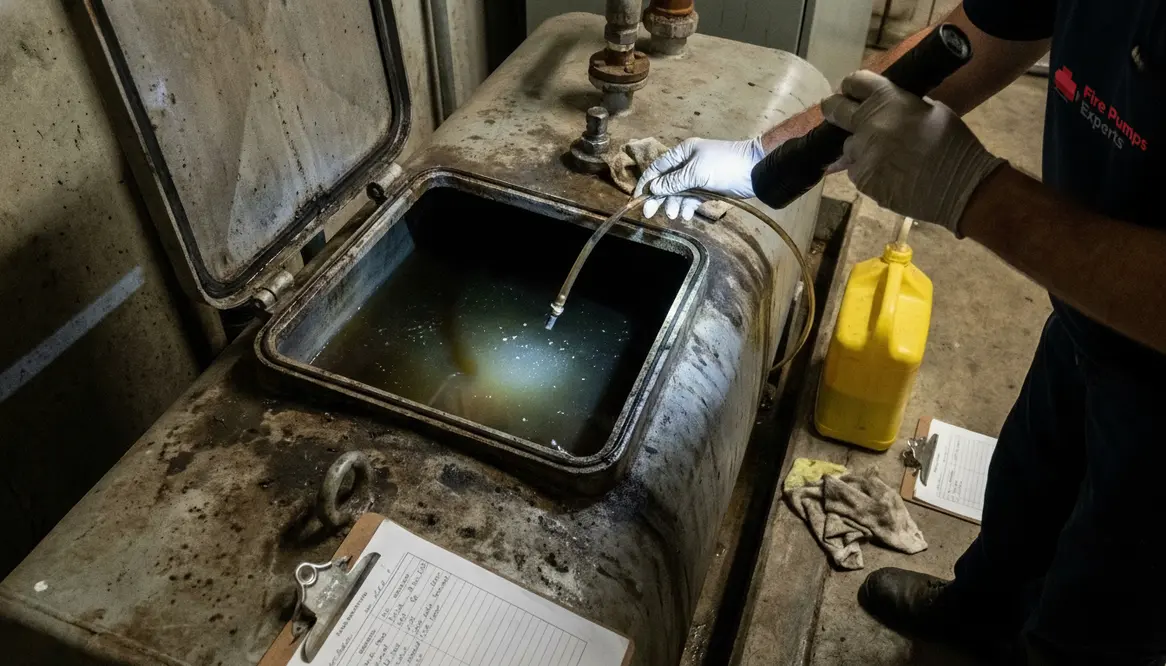
Inside a Diesel Fire Pump Fuel Tank: What Techs Look For
When I perform a diesel fire pump fuel tank inspection, I do not just glance at the tank and move on like I am checking a movie poster in a lobby. I look for the small things that can turn into big trouble when the pump must start without hesitation. In commercial and industrial facilities, and in major property buildings, that tank has one job: feed the fire pump with clean fuel when life safety is on the line. So, I check it with care, patience, and a healthy respect for what happens when a system gets ignored. Spoiler alert: nature does not care about your maintenance calendar.
In this article, I will walk through what technicians inspect inside the tank, why each detail matters, and how these checks support reliable fire protection. I will also keep it practical, because no one needs a lecture that sounds like a robot reading a service manual in a thunderstorm.
Why the inside of the tank matters
Inside the fuel tank, I look for anything that could stop the diesel engine from starting or running well during an emergency. Even a small issue can cause a delay, and a delay in a fire event is not a small thing. First, I check the fuel condition. Clean fuel supports reliable engine starts, while dirty or old fuel can clog lines, damage parts, and weaken performance. Then I look for water, rust, sludge, and any sign that the tank has begun to break down from the inside.
Because diesel fire pump systems often sit idle for long periods, the tank can become a quiet hiding place for problems. That is where a proper diesel fire pump fuel tank inspection earns its keep. It is not about looking busy. It is about making sure the pump can do its job when the building depends on it.
What I check first inside the tank
I start with the fuel itself. I want to know if it looks clear, smells normal, and shows no sign of separation. If the fuel looks dark, cloudy, or thick, I treat that as a warning sign. Next, I look for water at the bottom of the tank. Water can sneak in through condensation, loose fittings, or poor tank sealing. Once it settles, it can lead to rust and fuel growth that can clog the system. Yes, even tanks can get messy in ways that feel almost rude.
I also check for sludge and sediment. These usually settle at the bottom and can move into the fuel pickup during operation. That can choke the engine right when the fire pump must respond. In a major property building, that is the kind of surprise nobody wants on their day.
Inside tank checks
Fuel quality and signs of aging
Water buildup at the bottom
Sludge or sediment that can block flow
Rust or coating failure on tank walls
Damage to internal parts and fittings
Fuel pickup condition for steady supply
How I spot rust, coating failure, and damage
After I check the fuel, I inspect the tank walls and bottom for rust or coating damage. If the tank lining starts to fail, the metal beneath becomes exposed. Over time, that can create flakes, pits, and leaks. I also watch for corrosion around seams and internal supports. Those areas often tell the truth before the rest of the tank does.
Then I look at any internal parts I can reach or verify through access points. I want to know if strainers, pickup tubes, or fittings show wear, blockage, or loose placement. A diesel fire pump fuel tank inspection should always include these details, because the pump does not care how nice the tank looked from the outside. It wants fuel, and it wants it now.
What technicians test beyond the metal
Inside the tank, I also think about the system around the tank. I check vents, fill connections, access covers, and seals because they affect what gets in and what stays out. A weak seal can invite moisture and dirt. A bad vent can trap pressure or let contaminants enter. So, while the tank itself gets most of the attention, the connected parts matter just as much.
I also compare what I see inside the tank with the service history. If the fuel has been sitting too long, I may recommend cleaning, polishing, or replacement. If the site has had repeated water issues, I look for the source instead of just wiping the floor and calling it a victory. That may work in a sitcom. It does not work in fire protection.
How fuel tank findings connect to full fire pump service
Tank inspection never stands alone. It ties into the full fire pump system, including engine condition, controls, batteries, and weekly or monthly checks. If the fuel tank fails, the whole diesel fire pump can fail with it. That is why I treat tank findings as part of a bigger picture. For facilities that want to stay ahead of problems, I often point them to trusted fire pump support and system care through los angeles fire pump service and related fire protection resources. I also keep an eye on broader electrical and sprinkler needs through commercial fire and electrical services and fire sprinkler service guidance when the site needs a complete protection plan.
FAQ
Call to action
If you manage a commercial or industrial facility, or a major property building, do not wait for fuel trouble to show up like an unwanted sequel. Schedule a professional diesel fire pump fuel tank inspection and catch small issues before they become system failures. I can help you protect uptime, support code compliance, and keep your fire pump ready for the moment it matters most. That is the quiet kind of work that saves loud problems later.