What to Check If Water Is Found in Diesel Fire Pump Fuel
What Technicians Check When Water Is Found in Fire Pump Diesel Fuel
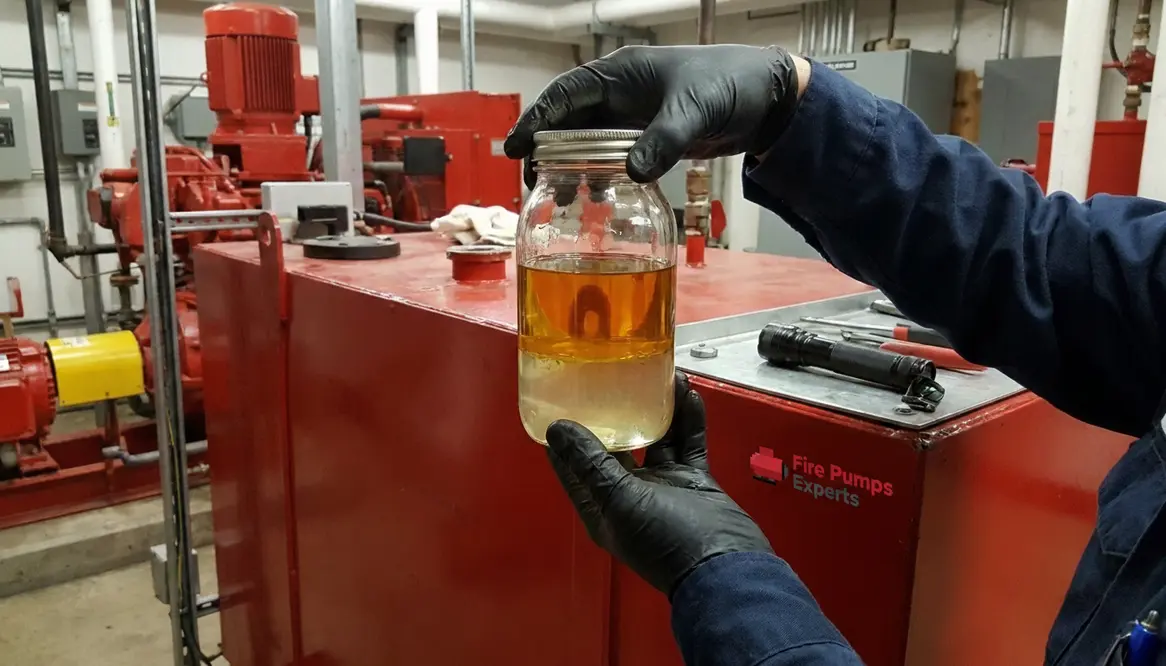
When I find water in diesel fire pump fuel tank, I do not treat it like a small nuisance. I treat it like a warning bell. In a commercial or industrial building, that fuel must stay clean if the fire pump is going to do its job without drama. And as any technician will tell you, fire protection does not like surprises. It prefers order, routine, and fuel that does not look like it came from the bottom of a swamp. So, when water shows up, I go straight into a careful check of the system, the source, and the damage already done.
In this article, I’ll walk through what I inspect, why each step matters, and how I keep the diesel system ready for the next emergency. I’ll keep it clear, practical, and useful for facilities that need reliable fire protection every day.
Why water gets into diesel fuel systems
First, I look at how the water got there. If I do not find the source, I only treat the symptom, and that is how repeat problems keep knocking on the door like a bad sequel nobody asked for.
I usually check these common causes:
- Loose or damaged tank caps
- Condensation inside the fuel tank
- Bad seals around fill ports and fittings
- Cracked piping or tank walls
- Water entering during fuel delivery
- Failed vents that let moisture in
After that, I review the site conditions. For example, a tank in a damp mechanical room or a poorly sealed outdoor area faces a higher risk. Likewise, if the fuel storage area has poor maintenance, water can build up fast. I also check whether the tank sits unused for long stretches, because idle fuel systems often collect condensation. That part is not glamorous, but neither is cleaning sludge out of a fire pump tank at 2 a.m.
How I inspect the fuel tank and fuel quality
Next, I inspect the tank itself. I check the bottom of the tank first because water settles there. Then I look at the fuel sample and watch for signs of separation, haze, rust, or sludge. If I see a clear layer under the diesel, that tells me water has already started to settle out.
I also check the tank interior if access allows it. I look for corrosion, pitting, debris, and microbial growth. Water and diesel together can create a perfect home for microbes, and those tiny troublemakers can clog filters and damage components. In other words, they act like squatters with no rent and a lot of bad habits.
Here, I also compare the condition of the fuel against the system’s service history. If the fuel has not been tested in a long time, I take a closer look at storage practices, delivery records, and past repairs. This helps me decide whether the issue came from a one time event or a long term maintenance gap.
What I check on the fire pump diesel fuel system
Then I move to the parts that support the diesel engine. I check the fuel filters, water separators, transfer lines, return lines, and injector related parts. Water can pass through the system and cause rough running, weak starts, or even shutdown when the pump must work hard.
I also test the engine start process. If the engine cranks slowly, misfires, or stalls, I do not ignore it. Those signs may point to contaminated fuel or damage from water exposure. For major facilities, that matters a great deal because the fire pump must start fast and run steady when the pressure drops.
At this stage, I may also inspect for the following:
- Clogged or soaked filters
- Rust inside fuel lines
- Faulty drains at the tank bottom
- Weak fuel pumps or transfer pumps
- Signs of injector wear
For larger buildings, I often coordinate this work with the broader fire protection setup. If a facility already works with a commercial fire pump service team, I want the fuel side checked as part of the full system picture, not as a side note that gets lost in the folder stack.
How I decide on cleaning, draining, or replacing fuel
Once I confirm water in the fuel, I decide how bad it is. If the water level is low and the fuel still looks usable, I may drain the water, clean the tank bottom, and replace filters. However, if the fuel has heavy contamination, I recommend full removal and replacement. That choice depends on the amount of water, the time it has sat in the tank, and the condition of the tank interior.
Sometimes I use a dual approach: I remove the contaminated fuel and clean the system at the same time. That saves time later and lowers the chance of a repeat failure. For many facilities, especially those with strict fire protection needs, this is the smarter path. A clean tank costs less than an engine failure during an emergency. That math is not hard, even if the fix takes patience.
How I prevent water from coming back
After the cleanup, I focus on prevention. I seal the entry points, inspect the venting, and make sure the tank stays in good shape. I also recommend routine fuel testing, regular drain checks, and scheduled inspections. If the fuel sits for long periods, I suggest a monitoring plan so water does not build up silently.
For commercial and industrial sites, I also review the fire protection program as a whole. A strong maintenance plan keeps the diesel pump ready, and it supports the larger fire safety system across the property. If a facility needs more help with system planning or inspections, I often point them toward a trusted fire pump installation and maintenance resource and, when needed, related electrical and fire protection services for the building. For regional support, I also reference los angeles fire pump service as a useful local SEO resource for facilities that need specialized fire pump help.
FAQ
Conclusion
If I find water in diesel fire pump fuel tank, I move fast, but I never rush the process. I inspect the source, test the fuel, protect the engine, and fix the conditions that let water in. That is how I keep a diesel fire pump ready for real service in a commercial or industrial setting. If your facility needs a closer look, I recommend scheduling a full inspection now. A calm system is a ready system, and ready is the only mood a fire pump should have.