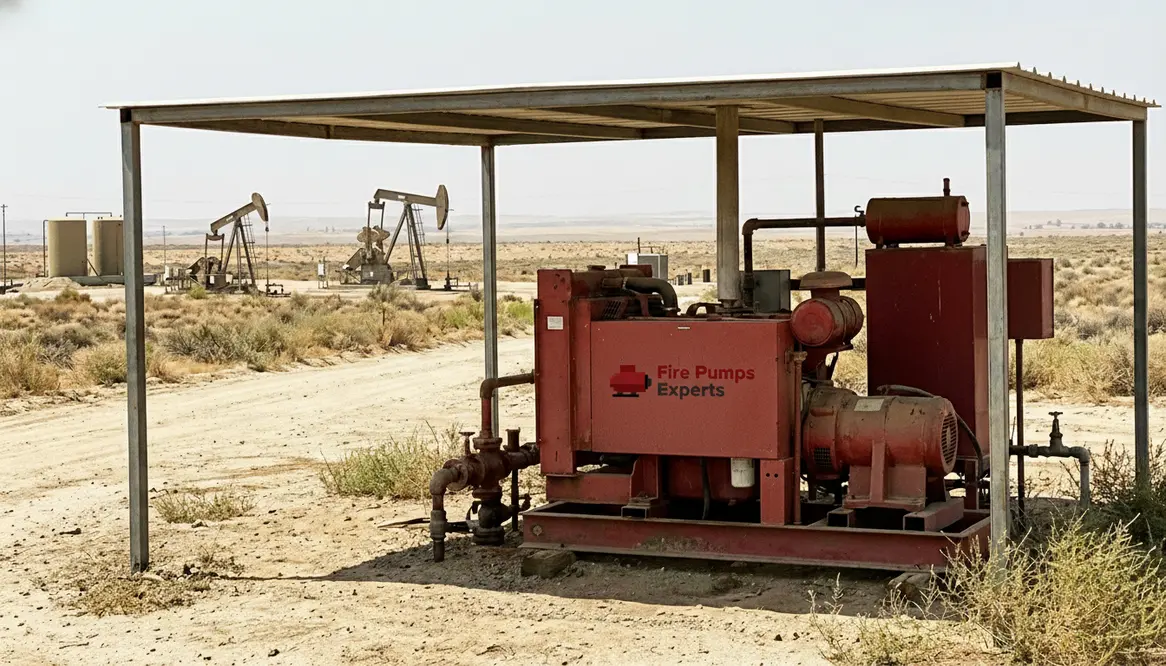
Kern County Fire Pump Design and Year Round Maintenance
I have spent years walking the dusty stretches of Kern County, where oil fields hum and wind carries a quiet warning. Fire risk does not take a day off out here, and neither should your protection systems. That is where year-round fire pump maintenance enters the conversation early, because in remote locations, failure is not an inconvenience. It is a liability with teeth. Today, I want to walk you through the real design challenges of fire pump systems in these isolated industrial zones, with a calm eye, a steady voice, and just enough humor to keep us both awake.
Kern County Reality Check
Remote facilities, harsh climate, and unpredictable utilities make fire protection design here closer to survival planning than a simple code exercise. Your fire pump cannot just meet minimum standards; it has to show up every single time, under less-than-ideal conditions.
Big Picture Goal
Build a fire pump system that is self-sufficient, resilient, and backed by disciplined, year-round fire pump maintenance so you are not betting your facility on good luck and short drive times for service crews.
What makes fire pump design in remote Kern County so difficult?
Let me answer that plainly. Distance changes everything. When your facility sits miles from the nearest municipal support, you cannot rely on quick fixes or outside intervention. Therefore, every fire pump system must be self sufficient from day one.
Additionally, water supply becomes unpredictable. Some sites depend on storage tanks, while others draw from wells that behave more like moody teenagers than reliable infrastructure. As a result, engineers must design systems that can handle fluctuating pressure without losing performance.
And then there is power. In remote Kern County, outages are not rare events. They are part of the rhythm. So, diesel driven pumps often take center stage. However, that introduces fuel storage concerns, emissions compliance, and ongoing testing requirements. It is a balancing act, and no one wants their fire pump behaving like a diva during an emergency.
Distance, Downtime, and Design Decisions
When replacement parts are hours away and technicians are juggling multiple remote sites, “we will fix it later” is not a real strategy. Design and year-round fire pump maintenance have to work together from day one so your system can handle power swings, pressure drops, and the kind of wear that comes from running in the middle of nowhere.
Designing for harsh environments and limited access
Kern County does not exactly roll out a red carpet for equipment. Heat, dust, and corrosion all play their part in wearing systems down. Because of this, I always recommend selecting components that can handle extreme conditions without constant attention.
Moreover, access roads can be rough or limited. That means installation crews, inspectors, and maintenance teams cannot simply swing by on a whim. Consequently, the system must be designed for durability and ease of service.
Environmental Pressures
- High temperatures that stress motors and seals
- Dust that clogs filters and impacts airflow
- Corrosive elements affecting metal components
Access Challenges
- Limited technician availability
- Delayed replacement part delivery
- Restricted inspection schedules
Because of these realities, thoughtful planning upfront saves a great deal of trouble later. Think of it as packing for a long road trip. You do not want to realize you forgot water when you are already in the desert.
Design tip for remote Kern County sites
Choose ruggedized equipment, weather-resistant enclosures, and layouts that allow technicians to reach critical valves, controllers, and gauges quickly. It makes every year-round fire pump maintenance visit more efficient and far less painful.
Power supply and reliability considerations
Now let us talk about power, the heartbeat of any fire pump system. In remote industrial facilities, reliance on the electrical grid alone can be risky. Therefore, many designs include backup diesel pumps or generators.
However, redundancy is not just about adding more equipment. It is about ensuring each component works seamlessly with the others. For example, automatic transfer switches must engage without hesitation. Fuel systems must remain clean and ready. And testing protocols must be consistent.
Interestingly, I have seen facilities invest heavily in backup systems, only to skip routine testing. That is like buying a parachute and never checking if it opens. It sounds dramatic, but the stakes are just as real.
Grid + Diesel Strategy
Designing around grid instability means coordinating electric pumps, diesel drivers, controllers, and alarm interfaces so that failure of one source does not slow the system down. Your emergency power plan should be as intentional as your hydraulic calculations.
Maintenance Makes It Real
Fuel polishing, battery checks, and scheduled test runs are not optional extras. They are the backbone of year-round fire pump maintenance that keeps drivers from failing on the one day they are truly needed.
Why year-round fire pump maintenance matters more in isolated sites
In a remote Kern County facility, maintenance is not a scheduled task. It is a survival strategy. With year-round fire pump maintenance, you catch small issues before they grow into system failures.
Additionally, continuous upkeep ensures compliance with safety standards, which is especially important for large commercial and industrial properties. Inspectors do not lower the bar just because your facility is far from town.
Routine checks also extend equipment life. Pumps, valves, and controllers perform better when they are not pushed to their limits without care. And let us be honest, replacing a fire pump system is not exactly a budget friendly surprise.
Furthermore, consistent servicing builds confidence. When an emergency happens, you want certainty, not guesswork. You want that system to respond like a seasoned professional, not a nervous rookie.
Maintenance mindset for remote Kern County fire pumps
- Treat inspections and testing as essential operations, not optional line items.
- Plan service routes and spare parts in advance, before seasonal demand spikes.
- Use data from inspections to refine design, not just to check boxes.
Smart design choices for long term performance
Designing a fire pump system in Kern County requires foresight. I always encourage clients to think beyond installation and focus on lifecycle performance.
For instance, selecting standardized parts simplifies repairs. Likewise, incorporating remote monitoring systems allows teams to track performance without being physically present. That alone can save valuable time and resources.
In addition, proper system layout matters. Clear access points, logical piping routes, and well placed controls make maintenance more efficient. It is not glamorous work, but it pays off when every second counts.
And yes, sometimes the smartest move is simply overengineering a little. Not extravagantly, but enough to handle the unexpected. Because in Kern County, the unexpected tends to show up uninvited.
Design moves that pay off later
- Standardized valves, gauges, and controllers across multiple sites
- Clear signage and lighting in pump rooms for faster troubleshooting
- Layouts that do not turn every valve exercise into an obstacle course
Where year-round fire pump maintenance fits in
When the design supports easy access and clear visibility, technicians can complete inspections faster and with fewer missed details. Over the life of the system, that combination of smart design and year-round fire pump maintenance turns into fewer surprises, fewer shutdowns, and fewer emergency calls.
Connecting Kern County design with NFPA-driven best practices
If you want a deeper look at how standards shape reliable fire pump installations, Kord Fire’s guide on NFPA 20 fire pump system design and compliance is a practical companion to the real-world challenges faced in Kern County’s remote facilities.
FAQ: Fire pump design in remote Kern County
What type of fire pump is best for remote locations?
Diesel driven pumps are often preferred due to their independence from unreliable power grids.
How often should fire pumps be inspected?
Weekly visual checks and monthly testing are standard, supported by continuous maintenance throughout the year.
Can remote monitoring improve system reliability?
Yes, it allows real time performance tracking and early detection of issues.
What is the biggest design challenge in Kern County?
Ensuring consistent water supply and power in isolated environments.
Is professional maintenance necessary for industrial facilities?
Absolutely, especially for large scale properties where system failure carries significant risk.
Conclusion: Build it right, maintain it always
Out in Kern County, distance does not forgive mistakes. A well designed fire pump system, supported by consistent care, protects your facility when it matters most. If you manage a commercial or industrial property, now is the time to invest in reliability, not react to failure. Partner with experts who understand these environments and prioritize performance every day. Because when the moment comes, your system should not hesitate. It should deliver, without question.