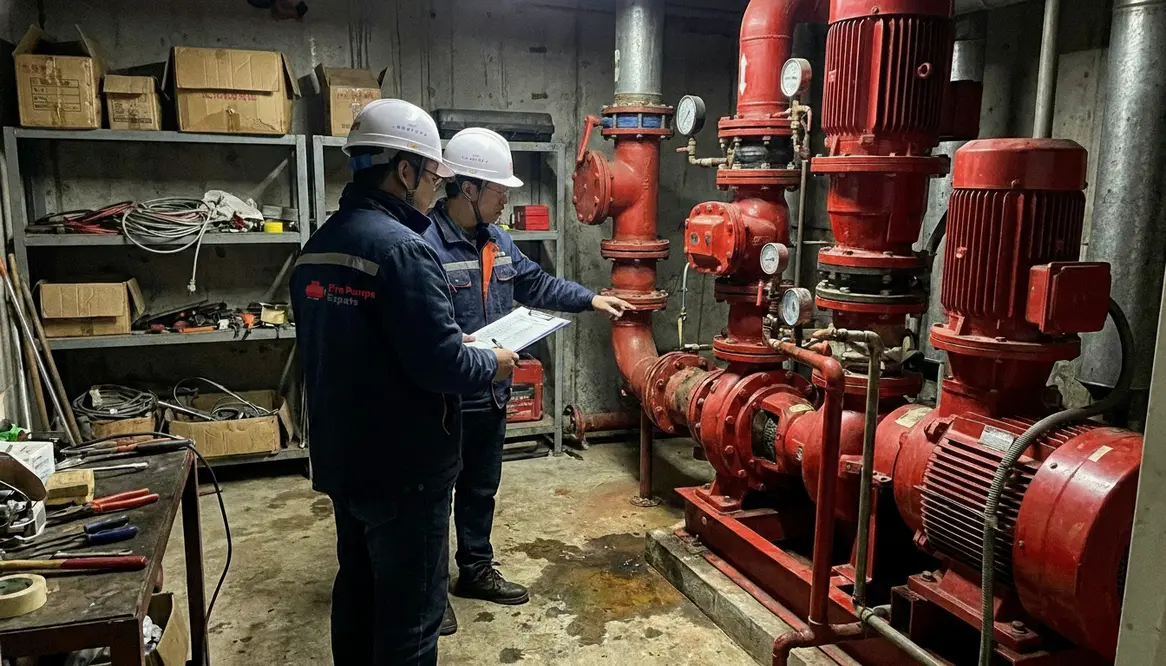
LPC Rules Fire Pump Replacement Planning Guide
I have learned that a fire pump replacement is never just a mechanical swap. It affects safety, code compliance, downtime, budgets, and the people who rely on the building every day. If you manage a commercial tower, industrial plant, or other major property, the LPC Rules replacement process deserves real planning, not a rushed weekend fix that hopes for the best. That would be like sending Batman in with a flashlight and a firm handshake. Instead, I take a structured approach so the new system supports the building, the risk profile, and the long game.
How I Start a Fire Pump Replacement Plan
I begin with a full review of the existing system. First, I look at the pump type, age, condition, and service history. Then I check why the replacement is happening. Is the pump worn out, failing tests, no longer code compliant, or too small for the current demand? That answer shapes the whole plan.
I also confirm the current building use. Commercial and industrial facilities change over time, and the fire protection system must keep up. A warehouse may add storage height. A plant may expand process lines. A high rise may change tenant loads. Therefore, I compare the current fire demand with the real risk on site.
Next, I document space, access, electrical power, and water supply. If the new pump cannot fit or cannot be fed properly, the plan fails before it starts. I like to catch those issues early, because surprises are fun in movies, not in fire protection.
What LPC Rules Replacement Means for My Facility
The LPC Rules replacement process focuses on matching the new pump to the correct protection needs while keeping the installation compliant. I treat it as both a code issue and a building operation issue. The pump must perform under fire conditions, and it must also fit the site without creating a mess for operations.
Here, I pay close attention to the following:
- Pump capacity and pressure needs
- Driver type and power source
- Suction and discharge conditions
- Controller compatibility
- Test requirements and maintenance access
In practice, I do not just ask, “Will it run?” I ask, “Will it run when the building needs it, and will we be able to prove it?” That second part matters. A shiny pump that cannot be tested or maintained is basically a very expensive paperweight with ambition.
How I Build the Timeline Without Hurting Operations
For a fire pump replacement in a busy facility, timing matters as much as the equipment. I build the schedule around shutdown windows, occupancy, production demands, and delivery lead times. In industrial sites, one bad timing choice can ripple through the whole operation like a bad sequel nobody asked for.
- Site survey and design review
- Equipment selection and submittals
- Permits, approvals, and coordination
- Removal of the old pump and related parts
- Installation, alignment, and connection
- Testing, inspection, and final sign off
Because major properties cannot afford long outages, I plan for temporary fire protection measures when needed. I also coordinate with the owner, facility team, alarm contractor, and fire protection partners. As a result, each party knows what happens, when it happens, and what backup steps are in place.
What I Check Before I Approve the New Pump
Before I approve a replacement, I verify the details that often get missed in a rush. First, I confirm that the pump matches the design demand under actual site conditions. Then I check whether the water source can support the system without trouble. After that, I review the controller, power supply, and any required changes to piping or valves.
Technical check
Pump curve, driver size, alignment, suction conditions, and controller setup
Operational check
Access for service, outage planning, testing path, and impact on building use
Also, I make sure the installation team can complete acceptance testing without cutting corners. A replacement project should end with proof, not hope. Hope is fine for lottery tickets. It is not a fire protection strategy.
Why I Treat Testing and Maintenance as Part of the Project
I never treat testing as an afterthought. Once the new pump is in place, I want clear proof that it works as intended. That means flow testing, alarm checks, controller checks, and a full review of the handoff paperwork. If anything looks off, I address it before the project closes.
After that, I set up the maintenance plan. Replacement is only the beginning. A new pump still needs regular inspection, testing, and service to stay reliable. Therefore, I work with the facility team to make sure the maintenance schedule is simple, realistic, and documented. A good plan keeps the pump ready, the staff confident, and the property better protected.
If you want more background on standards and service support, I recommend reviewing https://firepumps.org/ as part of your planning process.
FAQ
Bringing Your LPC Rules Replacement Plan Together
A well-run LPC Rules replacement project does not feel dramatic. It feels organized. The risks are understood, the outages are controlled, and the new pump behaves like it has always belonged there. The building team is not guessing; they know how the system performs, how it is tested, and how it will be maintained over the long term.
Starting early gives you room to do it properly. With a clear review of the existing system, a realistic schedule, and a focus on testing and maintenance, the LPC Rules replacement process becomes less about reacting to failure and more about steering the building toward resilience.
If your commercial or industrial facility needs a replacement plan, you can build one that fits the site, the code, and the schedule. Get ahead of failure, reduce downtime, and keep your building protected with a process that actually works. That is the goal, and it is a good one.