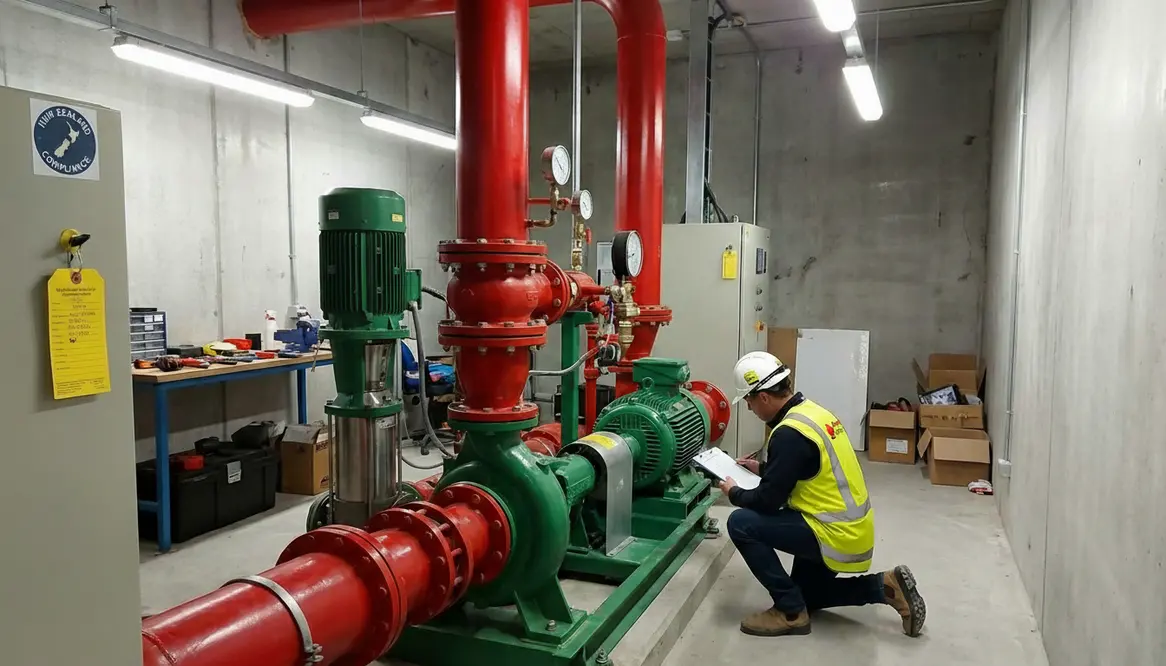
New Zealand Fire Pump Compliance Guide for Buildings
When I talk about New Zealand compliance for fire pump systems, I am talking about the quiet machinery that stands between a building and a very bad day. In commercial and industrial properties, fire pumps do not exist for decoration. They exist to keep water moving when fire systems need it most. If you own or manage a major property, I want you to think of this guide as your calm, no nonsense map through the rules, the checks, and the real world duties that come with keeping a fire pump ready. The stakes are high, but the process can stay clear. That is the good news, and unlike a sequel nobody asked for, this one matters.
What fire pump compliance means for major buildings
Fire pump compliance means I must prove the pump system works as designed, meets the right standards, and stays ready for use in an emergency. In large commercial and industrial sites, that includes water supply, pressure, controls, alarms, power backup, and regular testing. I also need records that show the system has been checked and maintained.
In practice, New Zealand compliance means more than ticking a box. It means the pump matches the building risk, the fire design, and the site layout. If the building changes, the fire protection plan may need an update. A warehouse extension, a new plant room, or a shift in tenancy can change the game fast. Buildings do not care about convenience, after all.
How I check fire pump system requirements
First, I confirm the fire pump matches the approved fire safety design for the building. Then I check the source of water, the pump capacity, the duty and standby setup if needed, and the control equipment. I also look at the pump room itself. It must stay accessible, ventilated, secure, and free from clutter. Yes, that means no storing random boxes beside critical life safety gear. The fire pump is not a spare shelf for old office chairs.
Next, I review the core performance points:
What I check
- Pump size and duty
- Water supply reliability
- Power supply and backup
- Controller function
- Alarm signals
- Access and clearance
- Maintenance log
Why it matters
- It must deliver the needed flow and pressure
- The system must work during a fire event
- The pump must keep running during outages
- The pump must start and respond correctly
- The system must alert faults early
- Crew must reach it quickly and safely
- Records prove ongoing care
Because fire systems are only as strong as their weakest part, I always check the whole chain. A strong pump with weak power backup is like Batman with no cape. Still interesting, but not ideal.
Fire pump testing and maintenance schedule
I follow a regular testing plan because a fire pump that sits quietly for months can develop problems without warning. Routine checks keep me ahead of failure. I look for leaks, vibration, strange noise, corrosion, worn parts, battery issues, low fuel, failed alarms, and control faults. I also test starting, running, and stopping functions as the site and system design require.
For commercial and industrial properties, the maintenance schedule should match the level of risk and the system type. Some sites need more frequent checks because of dust, heat, vibration, or heavy use. That matters in factories, logistics hubs, and large multi level buildings where systems work harder and face more wear. A pump room near a production floor does not live an easy life.
Documentation matters just as much as the physical test. I keep dated records, test results, service notes, and any repair history. If an auditor, insurer, or fire safety reviewer asks for proof, I want the answer ready. Fast. Clean. No detective work required.
How New Zealand compliance affects approvals and audits
Approvals and audits focus on whether the system meets the fire design, the building use, and the maintenance rules. I need to show the fire pump has been selected correctly, installed correctly, and cared for over time. If the building has undergone renovation, a change of use, or major plant upgrades, I review whether the fire pump setup still fits the site.
During an audit, the reviewer may ask how the pump was commissioned, who serviced it, when it was tested, and whether faults were fixed in time. They may also ask for evidence that any work followed proper standards. So, I treat the paper trail like part of the system itself. In this line of work, paperwork is not glamorous, but neither is a fire report written after the fact.
Common mistakes I see in major properties
I often see the same problems repeat in large buildings. These include blocked access to the pump room, missed test dates, incomplete logs, poor labeling, and parts left unrepaired after a fault. I also see sites where staff assume the system is fine because nobody has complained. That is a risky way to manage life safety gear.
Here are the mistakes I watch for most:
- Skipping monthly or periodic tests
- Letting storage crowd the pump room
- Ignoring small leaks or warning lights
- Using untrained staff for checks
- Failing to update records after repairs
- Changing the building layout without reviewing fire protection
When I fix these issues early, I protect the building, the people in it, and the business continuity behind it. That is the real win.
New Zealand compliance, risk, and real world operations
In the real world, New Zealand compliance is not just an abstract legal idea. It shapes how I plan budgets, schedule maintenance, train staff, and prepare for inspections. When I understand why each requirement exists, I can use the rules to support better performance instead of treating them like a burden.
For example, a solid maintenance routine reduces unplanned outages, which keeps tenants operating and insurers more comfortable with the site’s risk profile. Aligning systems with New Zealand compliance also makes it easier to justify upgrades, because the conversation moves from “nice to have” to “required to protect people, property, and operations.”
FAQ
These are the questions I hear most often when building owners and managers start tackling fire pump obligations alongside their broader New Zealand compliance work.
Conclusion
If I manage a commercial or industrial building, I treat fire pump care as a core duty, not an optional extra. I check the system, test it, document it, and fix problems before they turn into bigger ones. That is how I stay ready, stay compliant, and stay ahead of avoidable risk. If your building needs a fresh review of fire pump systems, now is the right time to act. Get the right support, confirm your setup, and keep your property ready for the moment that never asks permission.