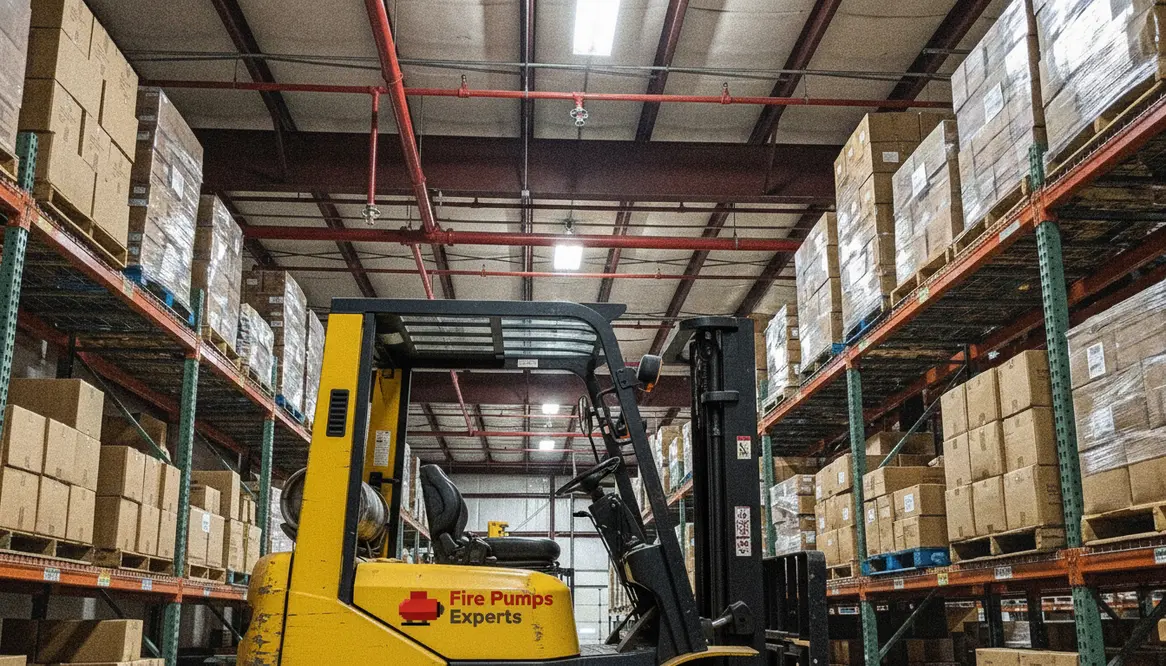
Storage Height Impacts Warehouse Sprinkler Systems
When I look at warehouse sprinkler systems, I see more than pipes, heads, and water pressure. I see a quiet line of defense standing between a storage building and a very bad day. And yes, storage height changes everything. A low rack warehouse and a tall bulk storage facility do not play by the same fire rules. As the stacks rise, the heat rises too, and the sprinkler demand gets smarter, stronger, and a lot less forgiving. That is where the real planning begins, because fire protection in a warehouse is never one size fits all. If it were, my job would be much easier, and frankly, less interesting.
Why Storage Height Changes the Fire Load
Storage height changes how fast fire grows and how hard it is to control. When products sit higher, they block heat from reaching sprinkler heads near the ceiling in the way a low pile would not. As a result, fire can build deeper inside the storage mass before water ever gets the memo.
That matters because taller storage often means more fuel, tighter heat pockets, and slower activation. In practical terms, the system must handle a bigger fire before it gets the chance to calm things down. So, the design needs to match the real storage layout, not the wishful thinking version where every aisle stays neat forever. In the real world, cartons shift, pallets grow legs, and inventory expands like it is training for a sequel.
How I Match Sprinkler Design to Storage Type
Not every warehouse stores the same thing, and that changes the fire plan fast. I always look at the product, packaging, rack type, and aisle width together. Then I look again, because one detail can change the whole system approach.
Here is a simple way I break it down:
Key Inputs
Product class affects how fast a fire spreads. Plastics burn hotter and longer than many plain goods.
Storage method matters because rack storage behaves differently than solid pile storage.
Ceiling height controls how far the water must travel before it can do its job.
System Behaviors
In rack protection may be needed when fire can hide inside the storage array.
Commodity arrangement changes spray reach, water demand, and head response.
Because of that, I never treat a warehouse like a giant box with shelves. It is more like a live system, always changing, always trying to surprise you. The fire design has to stay one step ahead, kind of like Batman, but with more engineering and less brooding.
What Happens When Height Goes Up
As storage height increases, the sprinkler system often needs a greater water supply and stronger pressure. That is not a small tweak. It can change pipe size, pump demand, and the type of sprinkler arrangement needed for the site.
Higher storage can also call for faster response from the system and tighter control over water distribution. If water lands too lightly or too late, the fire can keep building. So, I focus on coverage, density, and hydraulic performance as a team, not as separate boxes to tick off on a clipboard while hoping for the best.
And yes, once storage gets tall enough, the system stops being a routine install and starts acting like a top tier problem. That is where design review matters most, because the wrong setup can leave a major gap right when the building needs protection the most.
Dual Column View: Height Factor and Fire Protection Demand
Storage Height
Low storage usually needs less water demand and simpler sprinkler coverage.
Higher racks raise the chance that fire stays hidden inside the stored goods.
More vertical storage means more fuel in one area.
Fire Protection Demand
Tall storage often needs stronger flow, better pressure, and more exact spacing.
That often leads to in rack protection or special design rules for the space.
That can increase the total water supply the system must deliver during a fire event.
Why Pump Performance Becomes Critical
Once the storage gets tall, the pump becomes the unsung hero. It has one job, but it has to do it under pressure, literally. A weak pump can leave the whole system short, especially in large commercial and industrial facilities where water demand climbs fast.
That is why I pay close attention to pump requirements and supply sizing early in the process. For a deeper look at how pump sizing and supply rules support sprinkler systems, I recommend this guide to fire pump requirements for sprinkler systems. Also, for local commercial and industrial facilities, this los angeles fire pump solution is worth reviewing when pump performance must match real building demand.
When I work through the design, I want the pump, piping, and sprinkler layout to act like one team. If one part falls behind, the rest cannot carry the whole show. Fire protection does not care about good intentions. It cares about water, pressure, and timing. Cold, but fair.
FAQ
Conclusion
If you want warehouse fire protection to work when it matters most, start with storage height and build from there. I always treat tall storage as a serious design trigger, not a small adjustment. The right warehouse sprinkler systems plan protects people, property, and operations with far less drama later. If your facility stores high and moves fast, review your system now and make sure the design matches the real risk, not the old one.