Thailand Fire Pump Requirements for Buildings
When I look at Thailand fire pump requirements, I see more than a technical checklist. I see the quiet machinery that stands between a building and a very bad day. For commercial and industrial facilities, and for major property buildings, these requirements shape how a fire system performs when smoke starts moving and seconds begin to vanish. In Thailand, the rules focus on reliable water supply, correct pump sizing, proper pressure, backup power, and regular testing. So yes, it sounds a bit like a legal drama written by an engineer, but the stakes are real. If a pump fails, the whole system can stumble.
This article breaks down the core rules in a simple way, with a clear focus on large buildings, factories, warehouses, and major property sites. I’ll walk through what matters, why it matters, and how I’d approach it if I were making sure a building stays ready. Quiet confidence is nice. Code compliance is nicer.
Thailand fire pump rules at a glance
- Reliable, dedicated water supply sized to the building’s risk
- Pumps selected and sized for actual demand, not wishful thinking
- Stable power and backup arrangements to keep pumps running
- Accessible, protected pump rooms for safe operation and repairs
- Routine testing, inspection, and documentation that prove readiness
Think of these as the spine of the system. If any of them fail, the whole fire protection plan starts to wobble.
What Thailand fire pump requirements mean for large buildings
At the simplest level, Thailand fire pump requirements tell me how a fire pump system must support sprinklers, hydrants, and other firefighting lines in a building. These requirements matter most in commercial and industrial spaces because those sites often have wide floor areas, high fuel loads, and complex layouts. That means water must arrive fast and at the right pressure.
In practice, I look at four main parts: the pump itself, the water source, the power supply, and the control system. Each part must support the others. If one part fails, the rest start looking nervous, like a backup dancer missing the beat in a live show.
Core components in focus
- Pump unit – provides flow and pressure to sprinklers and hydrants
- Water source – storage tank or reliable network supply with enough volume
- Power source – electric, diesel, or both, protected from failure
- Control system – automatic starting, alarms, and monitoring
In large buildings, the interaction between these parts is what really counts. A strong pump on a weak water source is just expensive metal. A great power supply on a badly controlled pump is a nice generator feeding poor decisions.
Thailand requirements expect all four to work together under stress, not just look impressive on drawings.
Thailand requirements for fire pump room design and setup
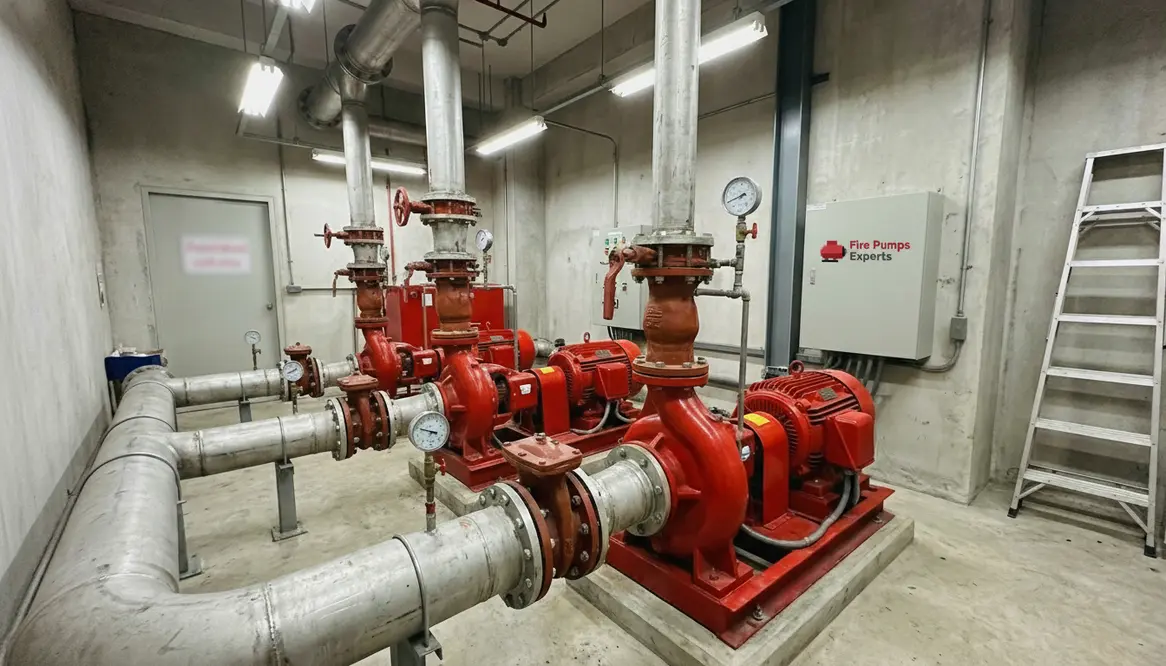
The pump room must stay easy to reach, protected, and built for safe operation. I always check that the room has enough space for maintenance, proper ventilation, drainage, and clear access to all equipment. The room should also protect the pump from heat, flooding, and damage. After all, a fire pump should not live in a place that feels like a sauna with bad lighting.
Fire pump room checklist in dual columns
Left column
- Clear access for technicians
- Enough room around the pump and controller
- Good airflow and cooling
- Drainage that keeps water away from equipment
Right column
- Protection from fire and flood risk
- Reliable electrical and fuel supply
- Visible gauges and controls
- Room lighting for inspection and emergency work
Also, I keep an eye on the water tank or water source. A fire pump cannot perform miracles if it has nothing to pull from. Therefore, the supply must hold enough water for the building’s risk level and fire demand.
How I size and choose a fire pump under Thailand fire pump requirements
Choosing the right pump is not guesswork. I start with the building type, fire protection design, required flow, and pressure. Industrial sites often need stronger performance because they cover large areas and may have higher hazard zones. Major commercial buildings can also need more than one pump, especially when the system supports both sprinklers and hydrants.
Generally, I look for the pump to deliver the required flow at the required pressure without strain. Then I check whether the system needs a main pump, a jockey pump, and a backup pump. The jockey pump keeps pressure stable, while the main pump handles the real work during a fire event. The backup pump steps in if the main one fails. Think of it like a movie franchise. The lead actor matters, but the sequel still needs to show up on time.
Key sizing habits that keep systems honest
- Match pump duty to calculated fire demand, not just catalog values
- Check both sprinkler and hydrant needs when they share a pump
- Confirm that suction conditions and water storage can support rated flow
- Allow for future expansion where the site is likely to grow
Handled properly, Thailand requirements guide those choices so the pump does not sit oversized, undersized, or simply confused by what the building expects from it.
Why power supply and testing matter in Thailand requirements
Power supply is one of the most serious parts of the system. A fire pump may use electric power, diesel power, or both. Because commercial and industrial buildings cannot afford a power failure during an emergency, I always make sure the pump has a dependable source that keeps it running under stress.
Power sources under pressure
Diesel pumps need fuel storage and regular engine checks. Electric pumps need stable power and proper control wiring. However, the real test is not just installation. It is performance under pressure, during routine tests and emergency conditions.
Testing that actually proves something
Testing should confirm flow, pressure, automatic start, controller response, and alarm function. In other words, the system should not be shy when the fire alarm calls. It must wake up fast and do the job.
When done consistently and documented clearly, those tests become the living proof that Thailand requirements are being taken seriously, not just mentioned in a report.
How I keep compliance with Thailand fire pump requirements over time
Compliance does not end when the pump starts working. It continues through inspection, testing, and maintenance. I always recommend routine checks on valves, gauges, batteries, fuel levels, and controller settings. I also review records, because paperwork may not fight a fire, but it can prove the system has stayed ready.
For commercial and industrial properties, I treat maintenance as part of risk control. Equipment ages. Seals wear out. Water quality changes. And a small issue today can grow into a costly failure later. So I keep the process simple: inspect, test, repair, and record. Repeat as needed, with the seriousness of a chef guarding the secret sauce.
When a site grows, the fire protection plan should grow with it. New floors, new storage, or new machines can change the fire load. Therefore, I review the system whenever the property changes. That keeps the design aligned with real site conditions, not just the original drawing.
Keeping Thailand requirements practical
- Use a simple maintenance schedule that matches the building’s risk
- Train staff on what alarms and abnormal readings actually mean
- Update records every time a pump is tested, repaired, or adjusted
- Review the whole system when occupancy or fire loading changes
- Bring in qualified specialists when tests show trends in the wrong direction
Handled this way, Thailand requirements stop feeling like paperwork and start acting like a quiet insurance policy built from valves, wiring, and moving water.
For more technical background on fire pump roles in broader fire protection strategies, resources like https://firepumps.org can be useful alongside local codes and regulations.
FAQ
Conclusion
If I had to sum it up, I would say this: Thailand fire pump requirements reward careful planning, strong installation, and steady maintenance. For commercial, industrial, and major property buildings, the goal is simple. Keep water moving, keep pressure stable, and keep the system ready before trouble arrives. If you need help reviewing a fire pump setup or improving compliance, I suggest taking action now. A well prepared system is cheaper than a disaster, and a lot less dramatic.