VdS CEA 4001 Fire Pump Rules for Storage Sites
VdS CEA 4001 Fire Pump Requirements for Storage Facilities
When I look at VdS CEA 4001 storage rules, I see one thing very clearly: fire pumps are not a nice extra. They are the muscle behind the whole sprinkler system. In storage facilities, where tall racks, packed aisles, and fast moving goods can turn a small fire into a full blown headache, the pump must deliver steady water fast. That is the part people often skip over until the day they really wish they had not. And, yes, the fire pump does not care how fancy the warehouse looks. It just needs to work.
This guide breaks down the main fire pump rules for storage facilities in a calm, plain way. I will walk through the key points, the common traps, and what to check before a project goes live. If you manage a warehouse, distribution center, or other major property, this will help you stay on the right side of the standard without needing a headache and a flashlight.
What VdS CEA 4001 means for storage sites
VdS CEA 4001 sets the bar for sprinkler and water supply design in storage buildings. It focuses on getting the right amount of water to the right place for the right time. That sounds simple, but storage sites are tricky. Goods may sit high, tight, and deep in racks, so the fire load can rise fast. Because of that, the fire pump must support the full system demand with no drama and no dropped pressure.
In practice, I treat the standard as a design map, not a suggestion box. It tells me the pump must match the hazard class, the layout, and the expected water demand. It also means the pump supply must remain reliable even when the rest of the site is under stress. In other words, this is not the moment to improvise like a jazz solo.
How I size fire pumps for warehouse risk
I size the pump from the sprinkler demand, the storage type, and the water source. First, I look at the hazard level. Then I check the density and duration needed for the protected area. After that, I compare the system demand with the available water pressure and flow. If the source falls short, the pump must make up the gap and keep the system stable.
Here is the basic thinking I use:
Dual view for quick checks
Left column: system demand
- Sprinkler flow rate
- Required pressure at the riser
- Duration of water supply
- Any hose or extra site demand
Right column: pump supply
- Net flow capacity
- Pressure at the duty point
- Water source reliability
- Backup power or engine supply
Once these match, I know the pump has a real job it can handle. If they do not match, the system may look good on paper, but paper does not stop fire. It barely survives coffee spills.
Which pump setup works best in VdS CEA 4001 storage
The right setup depends on site size and risk, but most storage projects need a duty pump and a clear backup plan. I look for a setup that keeps water moving even if the main pump fails. That may include a standby pump, a diesel driven unit, or another approved arrangement that protects uptime.
Pump room priorities for storage facilities
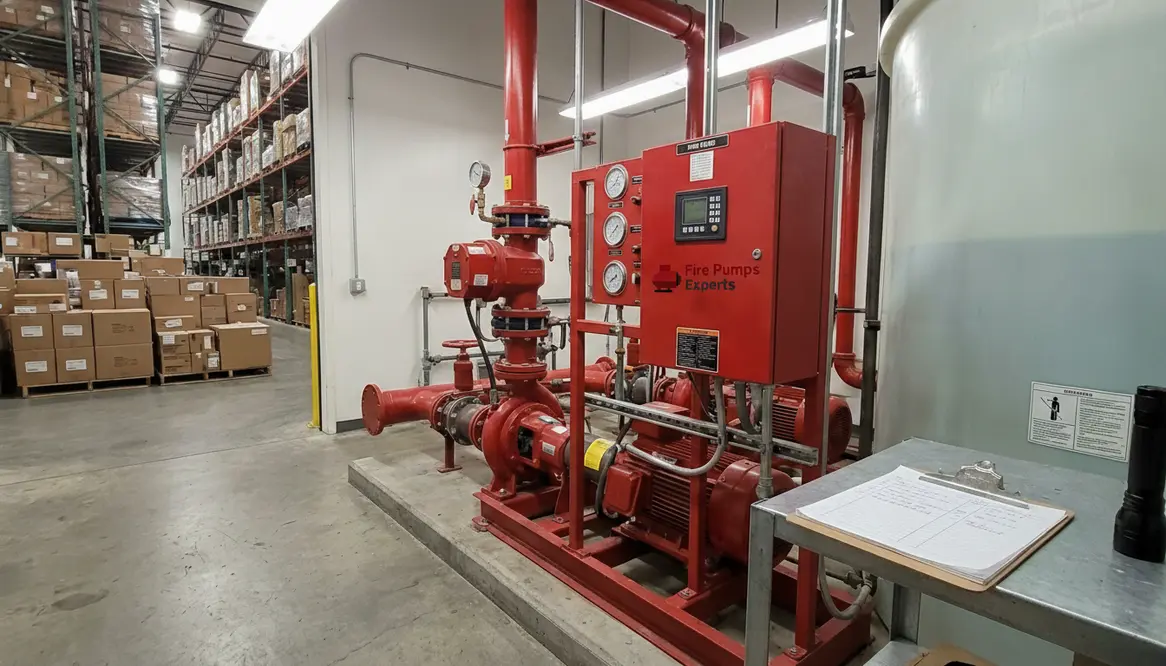
From my point of view, the pump room matters almost as much as the pump. It needs good access, safe working space, proper ventilation, and protection from flood, heat, and damage. Also, controls must stay easy to reach and test. A fire pump hidden in a messy room full of boxes and mystery cables is not a safety system. It is a plot twist.
I also check for suction conditions, pipe size, and valve layout. Poor suction can choke the pump, and that leads to pressure loss when the system needs every drop. Therefore, I want clean pipework, a solid water source, and a layout that supports fast service and testing.
How I test and maintain the system
I never trust a fire pump just because someone told me it is fine. I test it. Regular testing proves the pump starts, builds pressure, and delivers the needed flow. It also shows whether the driver, controls, and water source still perform as planned. Over time, wear can creep in quietly, which is why routine checks matter so much.
Maintenance should cover fuel supply, batteries, starter systems, pressure switches, bearings, seals, and valves. I also watch for corrosion, leaks, and vibration. If the pump shakes like it just heard bad news, something needs attention.
For storage facilities, I also recommend reviewing changes in the building itself. New rack heights, new product types, or layout changes can affect fire load. So, when the site changes, the pump design and sprinkler demand may need a fresh look. This is where disciplined records save time, money, and a few gray hairs.
Common mistakes I see in major storage projects
I see the same mistakes again and again. Some teams under size the pump because they base it on old assumptions. Others forget backup power or choose a water source that cannot keep up during long demand periods. A few even skip real testing after installation, which is the engineering version of “I trust my gut,” and that rarely ages well.
Coordination across the VdS CEA 4001 storage project team
Another common issue is weak coordination between the sprinkler designer, pump supplier, and site manager. When those groups do not talk early, the result can be poor pipe routing, awkward access, or a pump room that fails basic service needs. So, I always push for early planning and clear checks at every stage.
If you want deeper technical support, I suggest reviewing this fire pump guidance for commercial and industrial facilities as part of your project review process.
FAQ
My final takeaway for storage owners
If I had to sum it up, I would say this: a VdS CEA 4001 storage project lives or dies on water reliability. The pump must match the hazard, support the sprinkler demand, and stay ready every day. So, if you run a warehouse, distribution center, or other major property, do not wait for a problem to expose the gaps. Review your pump design, test it well, and keep the system honest. If you want help, now is the time to act.