Vertical Turbine Fire Pump Bowl Wear Reduced Performance
I have seen a vertical turbine fire pump go from dependable to disappointing faster than a superhero sequel nobody asked for. And most of the time, the trouble starts in the pump bowl assembly. Wear inside the bowl parts cuts efficiency, lowers pressure, and can leave a commercial or industrial fire system limping when it should be ready to fight. Since fire pump repair often begins with a close look at bowl wear, I want to walk through the warning signs, the causes, and the fixes that matter for major properties and large facilities.
When a fire pump loses performance, the problem rarely sits in one neat little box. Instead, it spreads through the system like gossip in a break room. That is why I look at wear, flow, vibration, and suction conditions together. The good news is simple. If I catch the issue early, I can protect the pump, keep the system reliable, and avoid a much bigger bill later.
Fast Clues, Real Causes
- Drop in discharge pressure
- Longer ramp-up to rated performance
- Vibration, noise, and unusual amperage changes
- Visible wear that matches measured clearance
What bowl wear does to pump output
Bowl wear changes the pump’s hydraulic shape. As clearances grow, water slips past parts that should guide it with force. As a result, the pump moves less water at the same speed. It can also lose pressure, which is bad news in a fire event and not much better on a maintenance report.
I usually see a drop in discharge pressure first. Then I may notice the pump takes longer to build to its normal point. In some cases, the pump still runs, but it sounds tired, like it pulled an all nighter with no coffee. That is not a small issue. For a vertical turbine fire pump serving a warehouse, tower, hospital, or large plant, even a mild loss can turn into a code and safety problem.
How I spot wear in the pump bowl assembly
I start with performance data. If the pump once hit rated flow and now falls short, I know I need to dig deeper. I also check for changes in amperage, vibration, and discharge pressure. These clues work together, and they tell a better story than one reading alone.
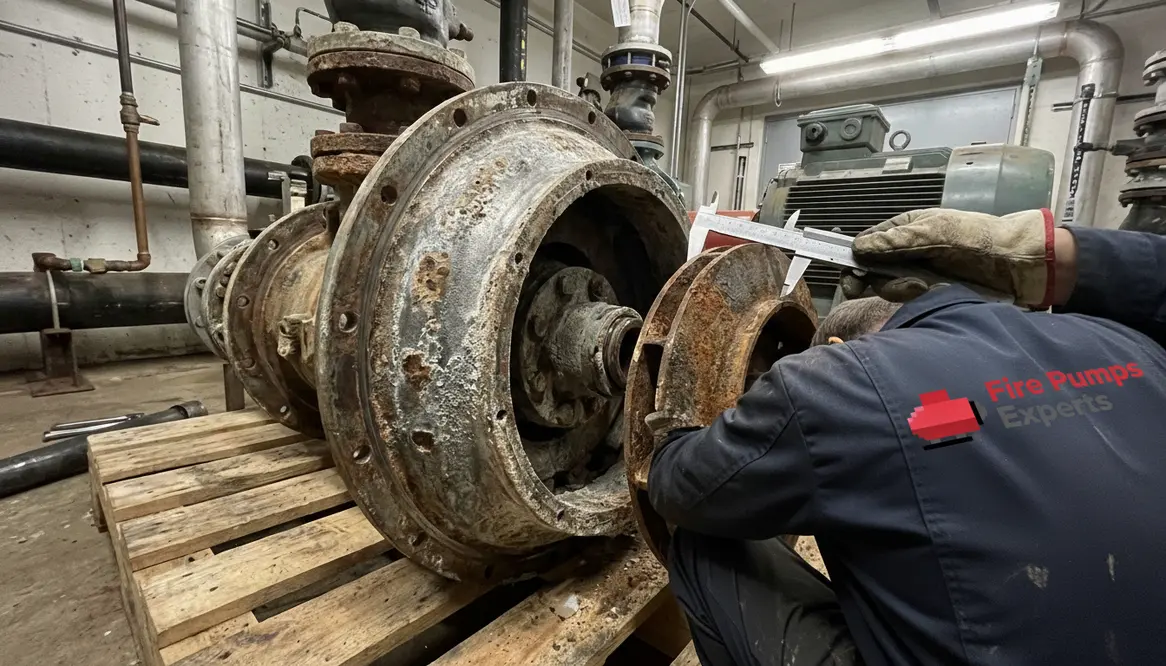
Then I inspect the pump bowl assembly itself. I look for worn impellers, damaged diffusers, eroded wear rings, and scored surfaces. Sand, rust, and abrasive grit can eat away at the metal over time. On top of that, a bad alignment or poor installation can add stress that speeds up the damage. It is a bit like wearing dress shoes on a gravel road. Something will give.
Here is the key point: wear does not always look dramatic. Sometimes the parts still look “fine” at a glance, but the clearances tell the real story. So I measure carefully, compare to spec, and do not trust a quick eyeball check. Eyes can lie. Calipers, thankfully, do not.
Why performance drops in commercial fire systems
Several things can push a pump toward reduced performance. I often find one of these issues at work:
Common causes
- Abrasive water that wears bowl parts fast
- Low suction supply that causes poor pump fill
- Misalignment that adds strain and vibration
- Old parts that have run past their useful life
What I watch for
- Lower pressure at the discharge side
- Flow that drops below expected levels
- Noise or shaking during operation
- Visible wear on bowl components
I also pay attention to system demand. Large facilities often change over time. A building may add load, expand storage, or alter water use. Therefore, the pump that once fit the job may now run harder and wear faster. That does not mean the equipment failed on day one. It means the job changed, and the pump never got the memo.
My repair approach for worn bowl parts
When I handle fire pump repair, I focus on the damage, the root cause, and the fit of the replacement parts. If the bowl wear is minor, I may restore the affected surfaces and replace the worn components. If the damage runs deep, I recommend a fuller rebuild.
I also check the shaft, bearings, and column assembly because bowl wear often sends stress to nearby parts. Fixing one piece while ignoring the rest is a little like replacing one tire on a car with a bent axle. It may roll, but not for long. So I make sure the repair matches the condition of the whole pump, not just the loudest problem.
For facilities that want support beyond the pump itself, I often point teams to related resources like los angeles fire pump service information and the broader work shown at Kord Electric. For sites that need sprinkler support as part of a larger fire protection plan, I also use Australian fire sprinkler services as a reference point for coordinated protection. These links help property teams see how the full system works together.
In other words, I do not treat the bowl as a lonely island. I treat it like part of the full emergency crew.
How I help facilities prevent the next failure
Prevention always costs less than panic. So I recommend routine testing, clean water supply checks, and scheduled inspections of the bowl assembly. I also suggest tracking pump curve data over time. When the numbers drift, I can catch the decline before it becomes a real problem.
For commercial and industrial properties, strong maintenance also means planning ahead for part replacement. If a pump has a long service life and works in a harsh water condition, I expect wear. That is not pessimism. That is just experience wearing work boots.
Above all, I keep the focus on reliability. A fire pump must perform when people do not have time to hope and pray. It needs to start, move water, and hold pressure with confidence. That is the whole show.