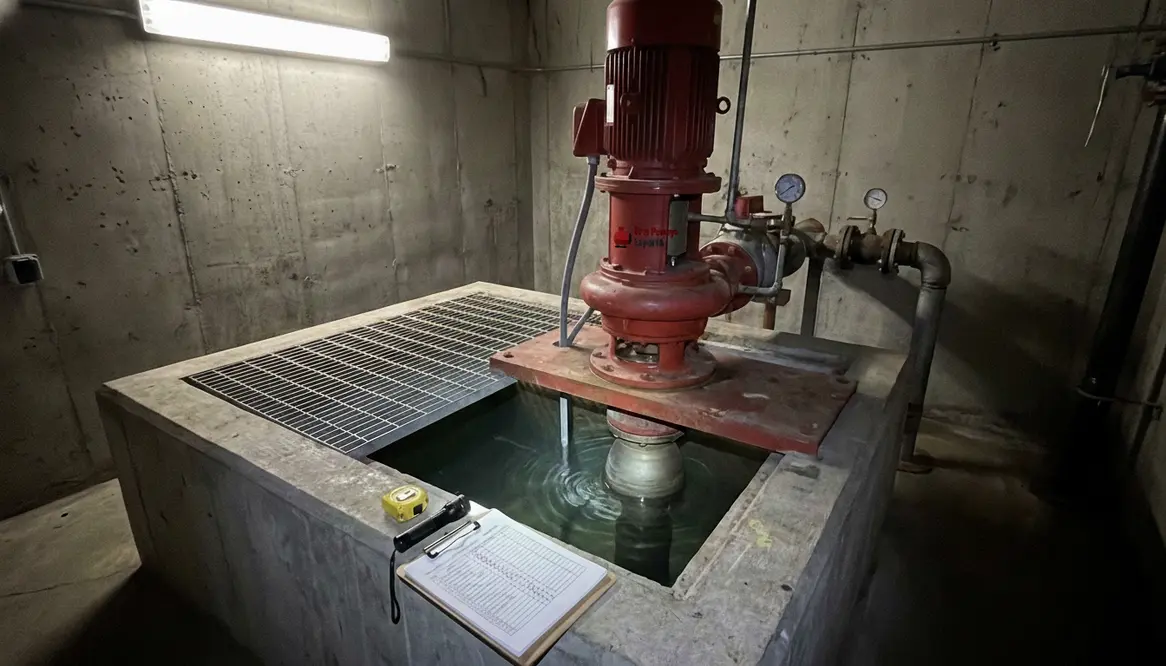
Vertical Turbine Fire Pump Minimum Submergence Explained
When I talk about vertical turbine pump submergence, I am really talking about the quiet line between a pump that performs like a pro and one that starts acting like it missed rehearsal. In fire protection, that matters. A vertical turbine fire pump needs enough water above the intake to keep air out, keep vortices down, and keep the system ready for the worst day nobody wants to imagine. For commercial and industrial facilities, that minimum water depth is not a nice extra. It is a make or break detail that protects life, assets, and business continuity.
So, let me walk you through it in plain language. I will cover what minimum submergence means, why it matters, how to size it, and how to avoid the usual mistakes that can turn a dependable fire pump into an expensive headache. No drama. Well, maybe just a little. Even fire pumps deserve a script that makes sense.
What minimum submergence means in simple terms
Minimum submergence is the lowest water level above the pump intake that still lets the pump run safely and smoothly. If the level drops too far, the pump can pull in air. Then the flow becomes unstable, efficiency falls, and the whole system can wobble like a shopping cart with one bad wheel.
For a vertical turbine fire pump, I look at three things right away. First, the intake must stay deep enough to prevent a surface vortex. Second, the water must cover the bowl assembly as the manufacturer and design standard require. Third, the site conditions must account for real life, not just a perfect lab drawing. Wind, drawdown, sediment, and seasonal water loss all matter.
Because this pump sits in a water source, its submergence is not just a number on paper. It is a live operating condition. If the water gets too low, the pump may cavitate, lose discharge pressure, or simply fail when the building needs it most. And that is the kind of plot twist nobody asked for.
Why submergence matters for fire protection
I treat submergence as a safety margin, not a decoration. Fire pumps must deliver reliable flow during a fire event, and a low water level threatens that reliability. A poor intake condition can cause air entrainment, vibration, noise, and uneven loading on the pump shaft and bearings. Over time, that wear can shorten equipment life and raise repair costs.
For commercial and industrial facilities, this risk carries even more weight. A warehouse, high rise, plant, or campus building depends on stable fire pump performance. If the pump cannot pull from the source as designed, the sprinkler or standpipe system may not get the pressure it needs. In other words, the pump can be present and still not be helpful. That is a rough way to spend a fire emergency.
How I determine vertical turbine fire pump minimum submergence
I start with the pump manufacturer’s data and the applicable fire protection standard, then I confirm the water source geometry. The basin or sump shape, intake location, water surface area, and expected drawdown all affect the result. I also check the approach flow because water should move cleanly toward the intake, not swirl around it like it is auditioning for a whirlpool commercial.
Key factors
Water depth, intake placement, and intake conditions determine whether your vertical turbine pump submergence behaves like a plan or like a maybe.
What they change
These variables affect air entrainment, vortex control, and how close you are to minimum submergence during drawdown.
In one list
- Water depth: More depth helps reduce vortex formation and keeps air out of the intake.
- Intake location: A poor intake height can pull in air even when the water level looks fine from a distance.
- Basin shape: Narrow or irregular pits can create unstable flow and lower usable submergence.
- Flow rate: Higher flow can increase drawdown and make minimum submergence harder to maintain.
- Sediment and debris: Mud and trash reduce effective depth and can disrupt intake flow.
- Seasonal changes: Dry months or heavy use can drop the water level below safe limits.
When I review a site, I do not guess. I compare the design condition, the lowest expected water level, and the pump’s intake needs. Then I look for a real margin. Fire systems should not run on wishful thinking. That method works better in movies than in mechanical rooms.
Common mistakes I watch for
The first mistake is assuming a pond, tank, or reservoir always has enough water. It does not. Water levels move. Second, people often ignore inlet turbulence. Even with enough depth, poor flow can create a vortex and pull air into the pump. Third, some designs leave too little room for future silt buildup. That is a classic “we will deal with it later” move. Later usually arrives with a maintenance bill.
I also see projects that focus only on pump size and pressure, while the intake gets very little attention. That is backwards. A powerful pump with weak submergence support is like a sports car with one flat tire. It may look impressive, but it will not get far when it counts.
How to protect performance over time
Good submergence design is only the first step. I always recommend regular inspection of the water source, intake opening, and surrounding basin. If sediment builds up, the effective depth drops. If debris blocks the inlet, flow patterns change. If water use from the site or drought conditions reduce the level, the margin shrinks fast. That is why vertical turbine pump submergence is something you monitor, not something you forget.
For facilities that rely on fire protection every day, I also suggest documenting water levels, intake conditions, and pump tests. That record helps spot trends before they become trouble. It also gives the maintenance team something better than guesswork. And guesswork, as we all know, is a terrible engineer.
SEO and service note for commercial facilities
If you manage a warehouse, plant, hospital, data center, or other major property, I would take this topic seriously and bring in the right help early. For a useful resource, see los angeles vertical turbine fire pump support. If you also want a broader technical overview, I recommend reviewing this fire pump submergence guide as part of your planning and compliance check. When you are verifying vertical turbine fire pump minimum submergence, it helps to bring the right eyes before the drawings turn into field surprises.
FAQ
Conclusion
If I had to sum it up, I would say this: vertical turbine fire pump minimum submergence is not a side note, it is the backbone of reliable fire protection. So, if your facility depends on a vertical turbine system, review the intake depth, watch the water source, and confirm the design still fits real conditions. If you need help, reach out to a fire pump specialist who serves commercial and industrial properties, because when the alarm sounds, precision beats luck every time.