What Is a Fire Pump? Complete Guide to Fire Pump Systems
How modern buildings keep water pressure ready for the one emergency everyone hopes never arrives.
When I explain what is a fire pump, I keep it simple. It is a machine that boosts water pressure so a sprinkler or standpipe system can do its job when a fire breaks out. In a big commercial building, a warehouse, or an industrial site, low pressure can turn a serious system into a very expensive decoration. That is not the kind of drama any property manager wants. So, today, I will walk through how fire pump systems work, why they matter, and what I look for when a facility needs one.
What a Fire Pump Does in a Commercial Facility
A fire pump helps move water fast and with enough force to reach the fire protection equipment across a large building. First, it pulls water from a reliable source, such as a tank, lake, or city line. Then, it increases pressure and sends that water through the sprinkler network or standpipe system. In a tall building or a sprawling plant, gravity and pipe friction can weaken water flow. That is where the pump steps in like the backup singer who suddenly carries the whole song.
In commercial and industrial properties, this matters because fire codes often require steady pressure for life safety systems. Therefore, I treat the pump as part of the building’s survival plan, not just another piece of mechanical gear. It supports fire suppression systems, protects assets, and helps first responders do their work faster.
How Fire Pump Systems Work
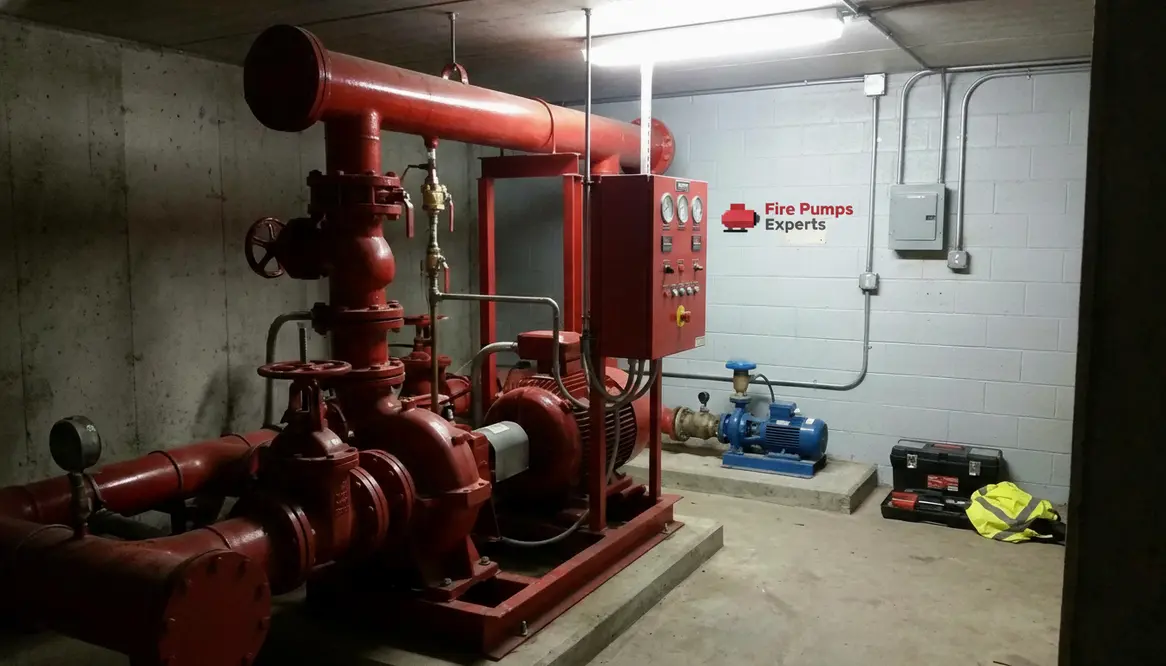
A complete system includes more than the pump itself. I usually see these main parts working together in every serious commercial or industrial setup.
Primary components in a fire pump setup
- Pump assembly: Builds the water pressure the system needs.
- Driver: Powers the pump with either electric power or diesel fuel.
- Controller: Starts, stops, and monitors the unit based on system pressure.
- Suction and discharge piping: Move water in and out of the system efficiently.
- Pressure maintenance unit (jockey pump): Keeps pressure stable during small drops so the main pump does not start for every tiny fluctuation. That would be like sending the Avengers because someone opened a faucet.
When a sprinkler head opens or a standpipe valve is used, pressure drops. As a result, the controller senses the change and starts the fire pump. The pump then runs until the pressure returns to the correct level or until the system is reset by trained personnel. This process sounds simple, yet it depends on careful sizing, proper installation, and regular testing.
Dual view of fire pump systems for facility teams
From an operations angle, I look at fire pumps as a pressure solution. From a safety angle, I look at them as a code driven life safety asset. Both views matter. Because if the system fails, the building loses one of its most important layers of defense.
Types of Fire Pumps I See Most Often
In commercial and industrial buildings, I most often work with a few common types. Electric fire pumps use the building’s electrical supply and fit sites with dependable power and proper backup. Diesel fire pumps use fuel and work well when power loss is a concern. Jockey pumps are smaller units that keep system pressure steady. Sometimes, I also see vertical turbine pumps in properties that use water from deep tanks or natural sources.
Matching pump type to the building
- Electric fire pumps where power is reliable and backup systems are in place.
- Diesel fire pumps where outages are common or utility service is less dependable.
- Vertical turbine pumps where the water source is a deep tank, reservoir, or natural source.
- Dedicated jockey pumps to maintain pressure between tests and alarms.
Choosing the right type depends on the water source, building height, fire demand, and code requirements. Therefore, I never treat the decision as one size fits all. A high rise office tower and a distribution center do not play by the same rules, and thank goodness for that. The fire protection world already has enough paperwork.
When asking what is a fire pump for your specific facility, the answer is always tied to your layout, hazards, water supply, and local codes rather than a generic catalog description.
Why Proper Sizing and Maintenance Matter
A fire pump that is too small will not deliver enough pressure. On the other hand, a pump that is too large can create damage, poor performance, or wasted energy. So, sizing must match the building layout, water supply, and sprinkler demand. I also pay close attention to maintenance because even a strong system can fail if no one checks it.
Routine testing and inspections
- Confirm that the pump starts automatically when pressure drops.
- Verify that it builds pressure and holds performance under load.
- Check for leaks, worn parts, controller issues, or fuel problems.
- Document test results to support code compliance and insurance requirements.
Routine testing helps confirm that the pump starts, builds pressure, and holds performance under load. In addition, inspections can catch issues before they turn into costly downtime. For major properties, that kind of oversight is not optional. It is part of staying open, safe, and ready.
If you are still wondering what is a fire pump doing for your balance sheet, remember that it protects people, property, and business continuity in a single package of steel, wiring, and spinning parts.
What Is a Fire Pump and When Do You Need One?
You need a fire pump when the available water pressure cannot meet the fire protection demand on its own. This often happens in large commercial buildings, tall structures, industrial plants, and major properties with long pipe runs. I also see them in sites with tanks or other water supplies that need added pressure to perform properly.
Before choosing a system, I recommend reviewing the building design, the fire protection layout, and the local code requirements. If you want expert support for a commercial or industrial site, you can learn more through commercial fire pump system solutions. That kind of guidance can save time, reduce risk, and keep your property ready for the moment nobody wants but everyone must prepare for.
In simple terms, when someone asks what is a fire pump and when is it required, the real answer lives in hydraulic calculations, elevation changes, and code references that prove your water supply can actually support your fire protection strategy.
FAQ
Conclusion
If you manage a commercial or industrial property, I urge you to take fire pump systems seriously. They protect people, support code compliance, and help your building perform when it matters most. So, review your water supply, check your pressure, and make sure your system matches your real risk. If you need help, reach out to a qualified fire pump specialist and get the right solution before the alarm ever sounds. When someone on your team asks what is a fire pump and why all the attention, you will have a clear, confident answer backed by a system that is actually ready to work.